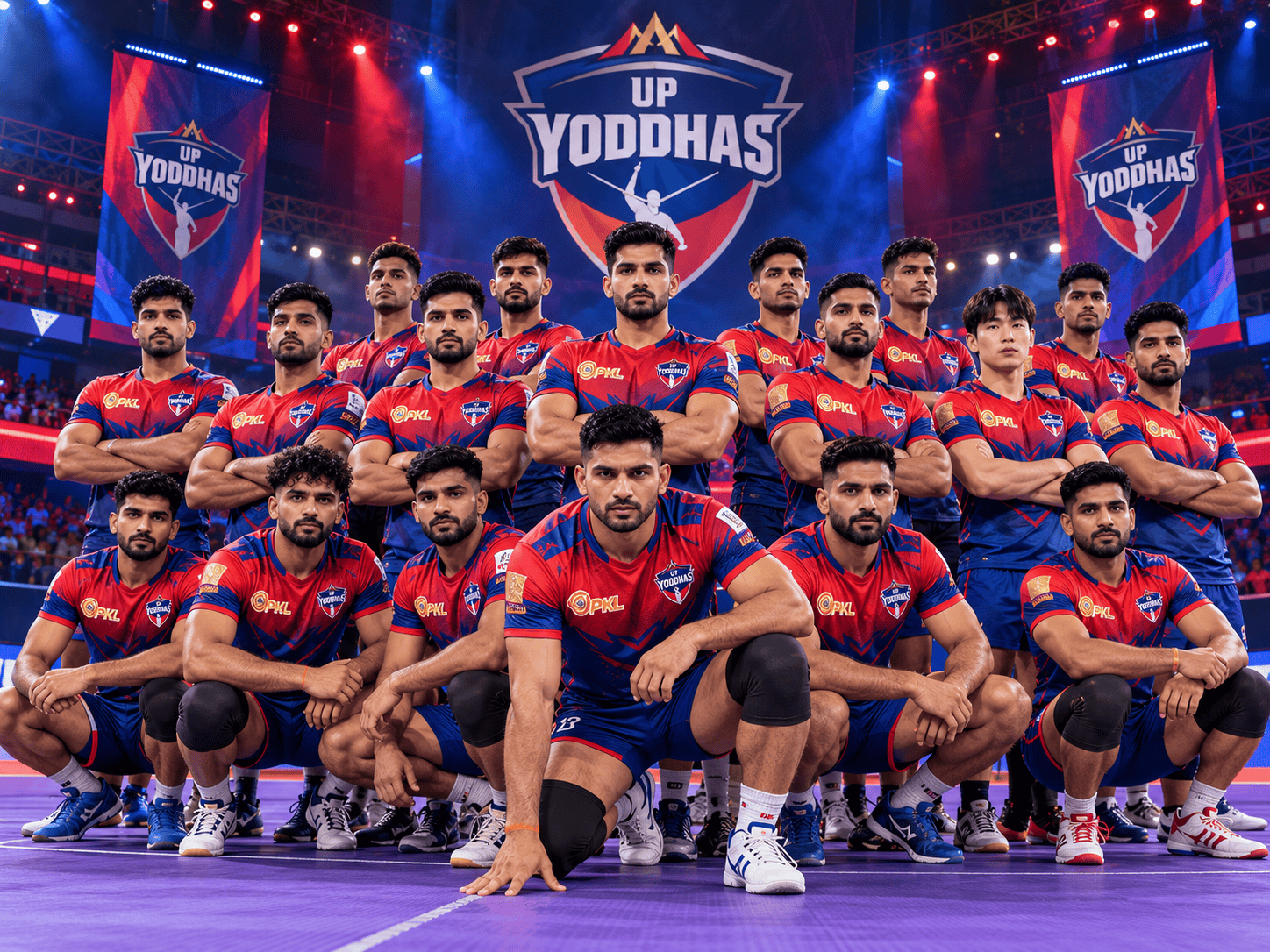
UP Yoddhas, the GMR Group-owned Pro Kabaddi League franchise representing Uttar Pradesh, has long been a model of steady competitiveness—reaching the playoffs in six of seven seasons between Season 5 and Season 11. Yet recent campaigns brought sharp reality checks: an 11th-place finish in Season 10 and a ninth-place exit in Season 12. With a deep defensive core, a marquee raider in Surender Gill, and a breakout star in Gagan Gowda, the side possesses the pieces to climb back. The appointment of Upendra Malik as head coach for Season 13 underscores a clear mandate: restore structure, diversify attack, and return to the business end of the table.
Franchise Identity: GMR’s Professional Machine in Lucknow
UP Yoddhas entered the Pro Kabaddi League in 2017 as a flagship property of GMR Sports, the vertical of the GMR Group that manages a growing portfolio across cricket and kabaddi. The conglomerate—known for infrastructure, energy, airports, and transportation—brought a corporate discipline to an indigenous sport, emphasizing analytics, sports science, and long-term athlete development. That ethos extends beyond the men’s PKL side: GMR Sports also owns Delhi Capitals in the IPL and international T20 franchises such as Dubai Capitals (ILT20) and Seattle Orcas (MLC).
The franchise’s home is the Babu Banarasi Das Indoor Stadium in Lucknow, a venue that has anchored UP Yoddhas since inception and strengthened its connect with Uttar Pradesh—one of India’s largest and most passionate kabaddi markets. The regional bond is more than symbolic; it fuels fan engagement, talent pipelines, and commercial partnerships.
Leadership and Coaching: Continuity Up Top, New Voice on the Sidelines
For Season 12, UP Yoddhas were led by defender
Sumit Sangwan (No. 10), with
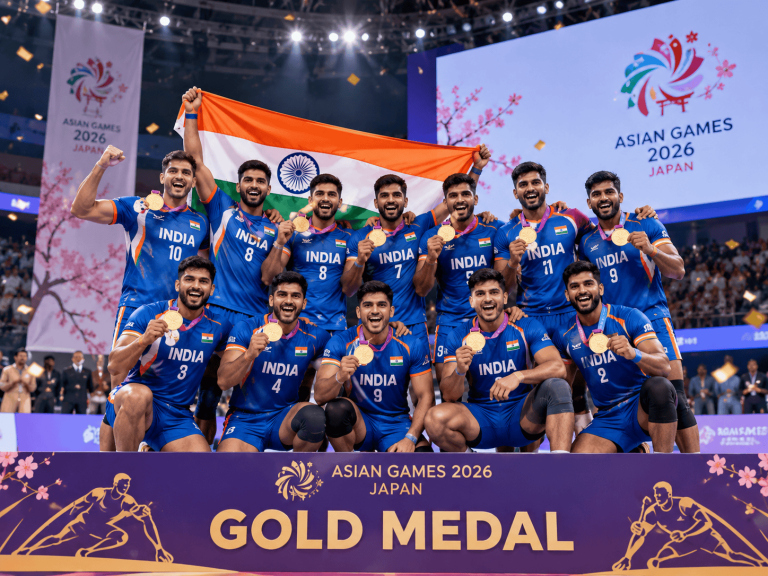
Ashu Singh (No. 44) serving as vice-captain. Sangwan, a left-corner defender, brought defensive grit and big-match experience—having featured in India’s gold-medal run at the Asian Games 2026, where his second-half defending helped turn the final against Iran. Ashu Singh, a right-cover defender, provided organizational stability at the back and acted as a senior voice in shaping defensive schemes.
The coaching chair saw a change ahead of Season 13:
Jasveer Singh, who guided the team in Season 12, was succeeded by
Upendra Malik. The move signals a reset—aimed at tightening structure, improving decision-making in endgames, and extracting more consistent output from the raiding unit.
Season 12 Squad (2025): Depth on Defense, Questions in Attack
UP Yoddhas entered Season 12 with a defense-heavy roster and a raiding group built around a primary scorer. The balance worked in flashes but proved vulnerable over a full campaign.
Defenders (11): Sumit Sangwan (No. 10, Captain, Left Corner, India); Ashu Singh (No. 44, Vice-Captain, Right Cover, India); Krishan (No. 22, Right Corner, India); Gangaram (No. 3, Left Cover, India); Hitesh (No. 12, Right Corner, India); Jayesh Mahajan (No. 2, Left Corner, India); Mahender Singh (No. 4, Left Cover, India); Mohammadreza Kaboudrahangi (No. 1, Left Corner, Iran); Ronak Nain (No. 77, Left Cover, India); Sachin (No. 5, Right Cover, India); Sahul Kumar (No. 66, Right Corner, India).
Raiders (8): Surender Gill (No. 11, Raider, India); Gagan Gowda (No. 7, Right Raider, India); Bhavani Rajput (No. 9, Raider, India); Guman Singh (No. 15, Raider, India); Dong Geon Lee (No. 17, Raider, South Korea); Jatin Singh (No. 33, Right Raider, India); Keshav Kumar (No. 6, Right Raider, India); Shivam Chaudhary (No. 99, Left Raider, India).
The international additions—Iran’s
Mohammadreza Kaboudrahangi in defense and South Korea’s
Dong Geon Lee in attack—were designed to add tactical variety and raise the ceiling in tight matches.
Player Profiles: The Core That Defines UP Yoddhas
Surender Gill (Raider)
Gill has been the face of UP Yoddhas since joining in 2019 (Season 7), logging
100+ matches for the franchise. Appointed captain for Season 11, he is best known for his consistency and composure. His career metrics with the team highlight a two-way understanding of the game: a
raid strike rate of 45% and a
tackle strike rate of 50%. Gill has spoken candidly about the pain of Season 11’s semi-final loss, calling it a match decided by “one raid”—a reminder of how fine the margins are at this level.
Gagan Gowda (Right Raider)
If Gill is the steady hand, Gagan Gowda is the accelerant. In Season 12, he emerged as the team’s primary scoring threat, averaging
11.33 raid points per game and ranking among the league’s top five raiders. He piled up
82 points in the first eight matches, notching multiple Super 10s and
four Super Raids. Hailing from Mangalore and starting kabaddi at 13, Gowda’s fearless style—attacking the right channel and converting empty spaces—made him a weekly highlight reel.
Sumit Sangwan (Captain, Defender)
Sangwan’s role extends beyond tallying tackle points. As captain, he sets the defensive tempo, orchestrates chains, and ensures covers and corners move as one. His international pedigree—particularly his second-half heroics for India at Asian Games 2026—translates into calm under pressure, a trait essential for a side that has struggled to close out close games.
Ashu Singh (Vice-Captain, Defender)
Ashu’s value lies in structure. A right-cover defender, he is often the link between corner and mid-line, responsible for cutting off escape routes and initiating multi-point tackles. His seniority helps standardize communication, especially when the opposition raider tries to manipulate the chain.
Mohammadreza Kaboudrahangi (Defender, Iran)
Kaboudrahangi adds an international dimension to the left corner. His presence broadens the defensive playbook, offering different angles of engagement and timing variations that can disrupt rhythm-based raiders.
Dong Geon Lee (Raider, South Korea)
Lee provides a contrasting raiding profile—quicker feet, varied footwork, and a willingness to probe the right cover. In a league where defensive chains can read patterns quickly, such variety is a strategic asset.
Performance Arc: Five Seasons of Highs, Lows, and Lessons
Season 8 (2021-22): Third Place, Playoffs
UP Yoddhas finished
3rd with
68 points from
22 matches (
10 wins, 9 losses, 3 ties). They beat Puneri Paltan
42-31 in Eliminator 1 before falling to Patna Pirates
38-27 in Semi-Final 1. It was the franchise’s
fifth consecutive playoff appearance since 2017, underlining a culture of consistency.
Season 9 (2022-23): Fourth Place, Playoffs
The team placed
4th with
71 points (
12-8-2 record) and a
+42 score difference, securing a
sixth straight playoff berth. In Eliminator 2, they drew
36-36 with Tamil Thalaivas and lost the tiebreaker
6-3. The season showcased balanced contributions: raiding aggression matched by defensive resilience.
Season 10 (2023-24): Eleventh Place, Missed Playoffs
A sharp decline followed. UP Yoddhas finished
11th with just
31 points (
4-17-1) and a
-116 score difference—their worst campaign. It was the first time the franchise missed the playoffs, ending a six-season streak. The issues were systemic: low raid success, defensive leaks, and an inability to win close contests.
Season 11 (2024): Sixth Place, Semi-Finalists
The rebound was emphatic. UP Yoddhas ended with a franchise-best
79 points (
13-6-3) and a
+26 score difference, finishing
6th. Under Jasveer Singh, they beat Jaipur Pink Panthers
46-18 in Eliminator 1 before losing a tight semi-final to Haryana Steelers
25-28. Gagan Gowda’s emergence as a lead raider and a sturdier defensive unit were the catalysts.
Season 12 (2025): Ninth Place, Missed Playoffs
Momentum stalled again. In an 18-match season, UP Yoddhas finished
9th with
14 points (
7-11) and a
-65 score difference. Early wins against Telugu Titans and Patna Pirates suggested promise, but inconsistency crept in. The attack managed
762 raids with a
37% success rate and
365 raid points (
11 Super Raids). Defense recorded
424 tackles,
38% success,
164 points, and
6 Super Tackles, while inflicting
17 All Outs. The team’s
highest score was 42, and the
biggest winning margin was 17 points (39-22 vs Tamil Thalaivas).
Gagan Gowda led scoring with
82 points in the first eight matches (about
11.5 per match), supported by
Bhavani Rajput (16 points) and
Guman Singh (24 points). Defender
Hitesh contributed
4 tackle points. The pattern was clear: strong starts, uneven finishes, and over-reliance on one raider.
Historical Ledger: The Big Picture Across All Seasons
Across eight PKL seasons, UP Yoddhas have played
182 matches, winning
79, losing
83, and tying
20—a
43.41% win rate. They qualified for the playoffs in
6 of 8 seasons (Seasons 5–9 and 11), with only Seasons 10 and 12 ending in misses. That historical consistency is the franchise’s identity—and the benchmark it must reclaim.
| Season |
Year |
Matches |
Wins |
Losses |
Ties |
Points |
Position |
Playoffs |
| Season 5 |
2017 |
22 |
10 |
10 |
2 |
62 |
6th |
Yes |
| Season 6 |
2018-19 |
22 |
8 |
10 |
4 |
57 |
6th (Zone B) |
Yes |
| Season 7 |
2019 |
22 |
13 |
7 |
2 |
74 |
3rd |
Yes |
| Season 8 |
2021-22 |
22 |
10 |
9 |
3 |
68 |
3rd |
Yes |
| Season 9 |
2022-23 |
22 |
12 |
8 |
2 |
71 |
4th |
Yes |
| Season 10 |
2023-24 |
22 |
4 |
17 |
1 |
31 |
11th |
No |
| Season 11 |
2024 |
22 |
13 |
6 |
3 |
79 |
6th |
Yes (Semi-Finals) |
| Season 12 |
2025 |
18 |
7 |
11 |
0 |
14 |
9th |
No |
Commercial Ecosystem: Sponsors, Kits, and Brand Equity
UP Yoddhas’ commercial portfolio reflects the league’s maturing marketplace. In Season 12, the principal partners included
Hero FinCorp (main sponsor),
Encalm Lounge (back), and
Ofis Square (sleeve). Over the years, the jersey has featured brands such as Tata Yodha, Karbonn Mobiles, Suzuki Access 125, Captain Morgan Cola, Valvoline, ABP News, Iodex, Fantasy Akhada, Batwinner, Citykart, Royal Enfield, Vision11, DafaNews, and Ananda—tracking the franchise’s journey from launch to mainstream visibility.
Kit manufacturing has evolved alongside:
T10 Sports (Seasons 5–7),
Sqad Gear (Season 8),
Shiv-Naresh (Seasons 9–11), and
PlayR (Season 12). These partnerships matter beyond aesthetics; they signal confidence in the franchise’s reach and fan engagement in a key Hindi-belt market.
Tactical Autopsy: Why Season 12 Slipped, and How to Fix It
The numbers tell the story. A
37% raid success rate and
38% tackle success are not playoff-grade over a full season. When your leading raider is producing at an elite clip but the supporting cast isn’t converting enough empty raids or multi-point tackles, the win curve flattens. UP Yoddhas’
-65 score difference indicates they were often on the wrong side of close games—a symptom of endgame execution and raid selection under pressure.
Three fixes stand out:
Diversify the raiding load: Build a secondary raider who can reliably deliver
8–10 points per match to reduce dependency on Gagan Gowda and prevent defensive chains from keying on one threat.
Improve tackle conversion: A
38% success rate suggests good positioning but suboptimal timing or chain coordination. Drills that emphasize synchronized lunges and anti-escape protocols can lift this into the mid-40s.
Win the last five minutes: Close-game management—raid choice, clock awareness, and defensive risk calculus—must be scripted. This is where coaching and captaincy converge.
Season 13 Outlook: Auction Priorities and Strategic Bets
With
Upendra Malik taking over as head coach, UP Yoddhas’ Season 13 blueprint should target four pillars:
Consistent raiding options: Acquire at least one more high-floor raider to complement Gill and Gowda, ensuring the attack doesn’t stall when the primary is neutralized.
Defensive stability: Retain the Sangwan-Ashu core but add a mobile mid-line defender who can initiate chains and convert near-misses into points.
All-rounders: Players who can raid and defend provide matchup flexibility and help manage foul trouble or fatigue late in games.
International X-factor: Strategic overseas signings—whether a crafty Korean raider or an Iranian anchor—can tilt tight matches by introducing unfamiliar patterns.
Expectations are straightforward: return to the playoffs. The franchise’s infrastructure, regional connect, and historical consistency (six playoff berths in eight seasons) argue for a rebound. The management’s willingness to change coaches signals urgency—and a clear-eyed view of what broke in Season 12.
Investor-Minded Takeaways: What Makes UP Yoddhas a Compelling Asset
Market scale: Uttar Pradesh is one of India’s largest fan bases for kabaddi, offering robust ticketing, broadcast, and sponsorship potential.
Corporate governance: GMR Sports’ multi-sport portfolio brings professional standards—analytics, sports science, talent development—that de-risk performance volatility.
Brand durability: Despite recent dips, the franchise’s six playoff qualifications in eight seasons demonstrate a resilient competitive model.
Growth levers: A women’s kabaddi ecosystem, deeper academy pipelines, and hyperlocal fan activations in Lucknow and beyond can expand revenue streams and talent supply.
Final Word: A Franchise Built to Bounce Back
UP Yoddhas’ story is not one of decline but of a high-standard organization confronting a rough patch. The foundation remains strong: a professional ownership group, a loyal home venue in Lucknow, a captain with international credentials in Sumit Sangwan, a veteran raider in Surender Gill, and a young scoring sensation in Gagan Gowda. Add a new head coach in Upendra Malik with a mandate to sharpen endgame execution, and the path back to the playoffs comes into focus. For a franchise that has made consistency its trademark, Season 13 is less about reinvention and more about returning to form.
Leave a Reply