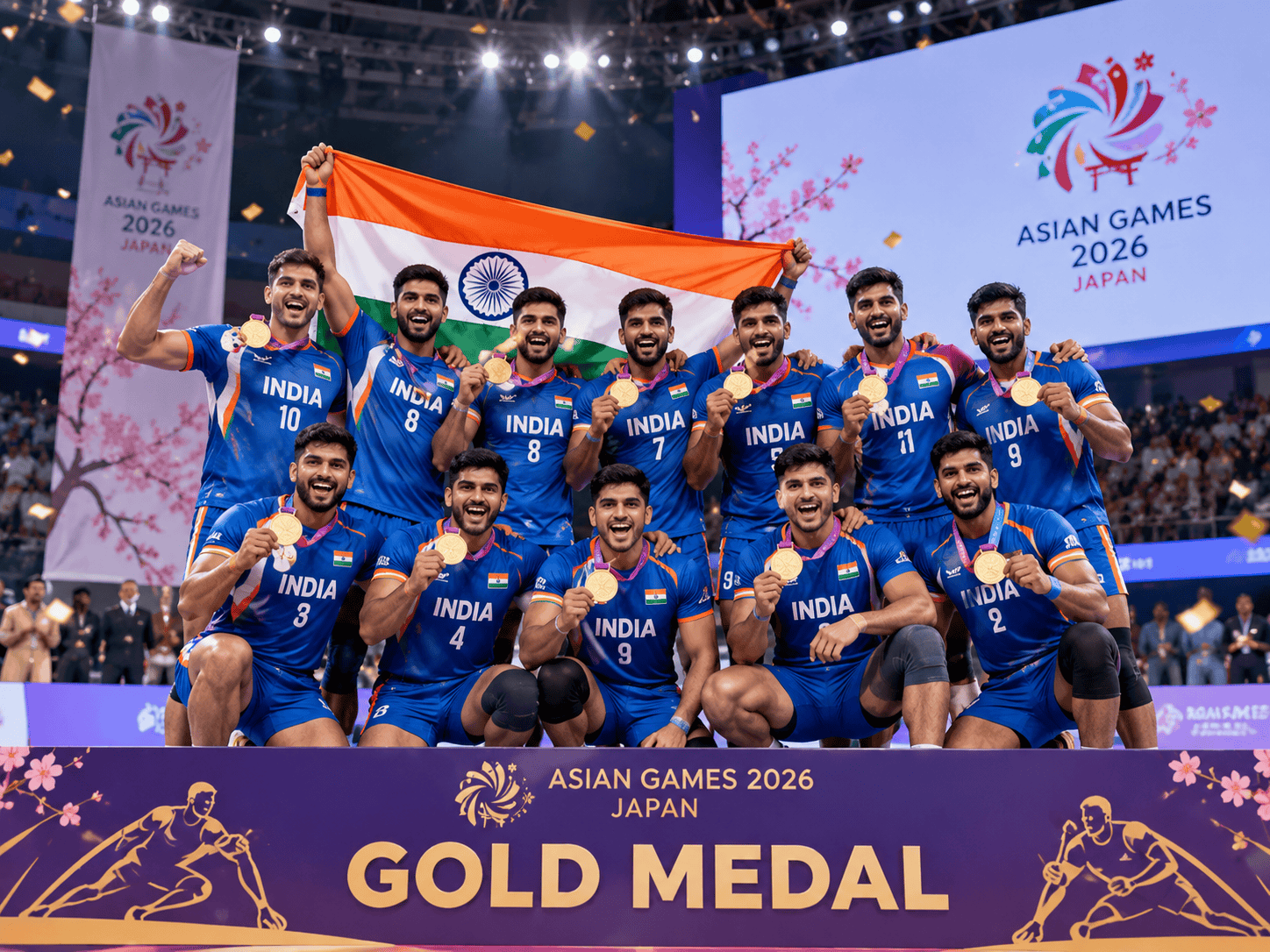
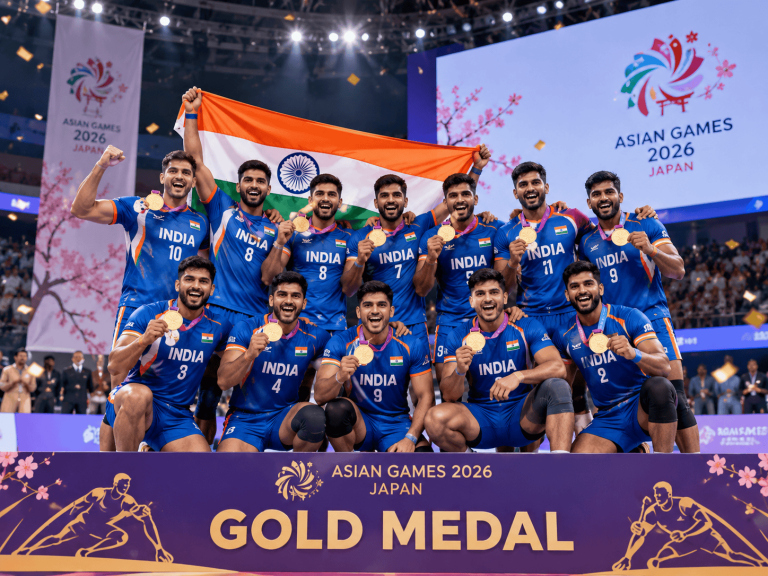
On September 26, 2026, inside the Tokai Citizen Gymnasium in Aichi-Nagoya, India wrote another golden chapter in its kabaddi story. Both the men’s and women’s teams defeated Iran in taut, high-stakes finals—40-34 and 37-34 respectively—to successfully defend their Asian Games titles and complete a historic “golden double.” The men secured their ninth continental crown; the women, their third straight gold. It was a day defined by clutch defending, intelligent raiding, and the kind of composure that separates champions from contenders. Beyond the medals, the victories underscored India’s enduring dominance in kabaddi and showcased a potent blend of seasoned campaigners and emerging stars poised to carry the legacy forward.
September 26, 2026: The Day Kabaddi Belonged to India
Kabaddi’s marquee occasion at Aichi-Nagoya unfolded as a twin thriller. The women’s final set the tone with a bright start and a steely finish; the men’s match answered with a second-half surge that turned a one-point halftime deficit into a six-point victory.
India trailed 18-17 at the break in the men’s final before
Sumit Sangwan’s inspired defending swung momentum decisively. On the women’s side, an early raiding burst helped India build a cushion they would not relinquish, closing out
37-34 under pressure.
The double gold lifted India’s tally to
28 medals (4 gold, 11 silver, 13 bronze), securing a top-10 finish in the overall standings. More importantly, it reinforced a simple truth: when the stakes peak, India’s kabaddi units find another gear.
Men’s Final: 40-34 Over Iran — How India Turned the Tide
The men’s final was a classic India-Iran duel: physical, tactical, and unrelenting. Iran’s game plan sought to disrupt India’s raiding rhythm and force errors in transition. For a half, it worked. But kabaddi is often decided by momentum shifts, and India’s came through defense.
Sumit Sangwan became the catalyst. His second-half tackles were not just points; they were statements—crunching stops that broke Iran’s attacking confidence and opened windows for India’s raiders to exploit.
Arjun Deshwal ensured India did not surrender the lead in the closing stages, anchoring the defense as the clock wound down. The final scoreline—
40-34—reflected both the contest’s tightness and India’s superior finishing when it mattered.
Women’s Final: 37-34 Over Iran — Early Points, Steely Nerve
The women’s match preceded the men’s and delivered its own drama. India raced to a
5-2 lead thanks to sharp raids from
Pooja Kajla (Hathwala),
Sanju Devi, and
Nikita Kumari. Iran responded with grit, but India’s structure held: corners stayed compact, covers timed their lunges, and the raiding unit kept the scoreboard honest. In the tense final minute, with Iran needing points, a
crucial tackle on Aynaz effectively sealed the contest. Final:
37-34.
India Men’s Kabaddi Squad: Continuity Meets Firepower
Only four members from the Hangzhou 2023 gold-winning squad returned—
Arjun Deshwal, Sunil Kumar, Pawan Sehrawat, and Aslam Inamdar—yet the unit felt both familiar and refreshed. The 12-member roster balanced PKL-tested raiders with a defensive core built for high-pressure finals.
Complete Squad: Sunil Kumar (Captain), Ashu Malik, Ayan Lohchab, Devank Dalal, Arjun Deshwal, Jaideep Dahiya, Rahul Sethpal, Gaurav Khatri, Sumit Sangwan, Ankit Jaglan, Pawan Sehrawat, Aslam Inamdar.
Sunil Kumar (Captain, Defender)
Born
May 12, 1997 in Bhainswal Kalan (Sonipat, Haryana), Sunil grew up in a farming family steeped in kabaddi tradition. Inspired by cousins like Parvesh Bhainswal, he began at age 11, won Junior Nationals in
2015 and 2016, and entered the Pro Kabaddi League (PKL) with Patna Pirates in Season 4. He later captained Jaipur Pink Panthers to their
2022 PKL title and represented India at the 2022 Asian Games in Hangzhou, winning gold. At Aichi-Nagoya, his leadership and defensive reading of Iran’s patterns helped steady India after halftime.
Ayan Lohchab (Raider)
At
20, Ayan is among India’s most exciting raiders. He debuted in PKL Season 11 (2024) with Patna Pirates, scoring
184 raid points in 25 matches and earning Best New Young Player. In Season 12, he finished as the league’s top raider with
316 raid points. A gold medalist at the 49th Junior Nationals and a two-time Khelo India Youth Games champion, Ayan’s composure under pressure added a vital edge to India’s attack.
Devank Dalal (Raider)
From Singhpura Khurd (Rohtak, Haryana), Devank’s rise is as disciplined as it is rapid. An Indian Army representative, he debuted in PKL Season 9 (2022) with Jaipur Pink Panthers as a New Young Player. In Season 11 (2024), he finished as the league’s best raider with
301 raid points in 25 matches for Patna Pirates. In Season 12, he became the
most expensive Indian player, captaining Bengal Warriorz and collecting
271 raid points in 16 matches. He reached
400 raid points in just 38 matches, surpassing previous records held by Siddharth Desai and Naveen Kumar.
Pawan Sehrawat (All-Rounder)
One of PKL’s most decorated names, Pawan debuted in Season 3 (2016) with Bengaluru Bulls and has played
10 seasons, amassing
987 raid points in 136 matches. He won the MVP award in 2018 and holds the record for
most raid points in a single match (39). A national team regular since 2019, his medal cabinet includes gold at the 2019 South Asian Games, 2022 Asian Games, and 2023 Asian Kabaddi Championship. In Aichi, his versatility and big-match temperament were invaluable.
Aslam Inamdar (All-Rounder)
Aslam’s journey—from collecting plastic bottles and sleeping under train seats as a teen to two-time Asian Games gold medallist—is kabaddi’s inspiration story. Born
February 23, 2000 in Taklibhan (Maharashtra), he joined Puneri Paltan in PKL Season 8 (2021), earning Rs 8 lakh—his first substantial income. He captained Puneri Paltan to their maiden PKL title in Season 10 and was named MVP. After Hangzhou 2023 gold, he returned in 2026 as a left cover who impacts both defense and attack.
Arjun Deshwal (Defender)
A mainstay in India’s backline, Arjun was part of the 2022 Asian Games gold-winning squad and reprised that role in 2026. His consistent defensive contributions ensured India stayed ahead of Iran in the match’s decisive phases.
Sumit Sangwan (Defender)
Sumit’s second-half performance was the men’s final turning point. His tackles did more than earn points; they shifted momentum, disrupted Iran’s raiding patterns, and gave India’s attackers the platform to finish strongly.
The Supporting Cast
Ashu Malik: Experienced defender, key to India’s compact structure.
Jaideep Dahiya: Dynamic raider who added depth and variation.
Rahul Sethpal: Versatile presence offering balance across phases.
Gaurav Khatri: Strong defender reinforcing the line.
Ankit Jaglan: Talented all-rounder deepening the squad’s options.
India Women’s Kabaddi Squad: Experience Guiding a New Wave
The women’s roster blended veterans with debutants—
eight of 12 were Asian Games first-timers—yet played with the assurance of a unit that had been here before. Led by captain
Pushpa Rana and deputy
Ritu Negi, the squad featured Arjuna Awardee
Pooja Kajla (Hathwala) and the breakout star of the tournament, 17-year-old
Nikita Kumari.
Complete Squad: Pushpa Rana (Captain), Ritu Negi, Sonali Shingate, Sanju Devi, Pooja Kajla (Pooja Hathwala), Ritu Sheoran, Jyoti Thakur, Pinki Roy, Manisha Kumari, Bhavna Thakur, Rajrani, Nikita Kumari.
Pushpa Rana (Captain, All-Rounder)
Pushpa’s leadership provided the women’s team its backbone. An experienced all-rounder and 2022 Asian Games gold medallist, she delivered on both sides of the mat in the final. Her return to Dharamsala drew a hero’s welcome at the SAI National Centre of Excellence, where she continues to inspire the next generation.
Ritu Negi (Deputy Captain, Right Corner)
Born
May 30, 1992 in Sharog (Sirmaur, Himachal Pradesh), Ritu is one of Indian women’s kabaddi’s most accomplished figures. Honored with the
Arjuna Award on January 9, 2024, she captained India to gold at the 2022 Asian Games, won silver in 2018, and gold at the 2019 South Asian Games. She also led India to the Under-20 Asian title in Malaysia in 2011. In Aichi, she served as deputy captain, played a crucial role in the final, and afterward advocated for kabaddi’s Olympic inclusion and a women’s league.
Pooja Kajla / Pooja Hathwala (Left Raider)
Recently conferred the Arjuna Award, Pooja was central to India’s early momentum in the final. Alongside Sanju Devi and Nikita Kumari, she helped India sprint to a
5-2 lead, using her raiding craft to stretch Iran’s defense and create openings.
Nikita Kumari (Left Raider)
At
17, Nikita emerged as one of the tournament’s standout stories. Born
July 15, 2009 in Hasangarh (Hisar, Haryana), the fourth of seven siblings, she started kabaddi at eight, captained India’s junior side, and made her senior debut at these Asian Games. In the final, she scored
five crucial raid points and contributed in defense, playing like a “live wire” throughout. Her coach, Sandeep Singh, has trained her and her sisters for nearly nine years; back home, villagers celebrated with fireworks.
Sanju Devi (Both-Side Raider)
Sanju continued her strong 2025 form into 2026, delivering key raid points in the final. Her ability to raid from both flanks gave India tactical flexibility and kept Iran’s defenders guessing.
Jyoti Thakur (All-Rounder, Right Corner Defender)
From Jakhed village (Solan, Himachal Pradesh), Jyoti won her second consecutive Asian Games gold after featuring in the 2022 Hangzhou squad. A dependable right-corner defender, she holds a Master’s degree in Sociology and balances sport with education. She trained at the SAI National Centre of Excellence in Dharamsala and returned home to a hero’s welcome with Pushpa Rana and Bhavna Thakur.
Sonali Shingate (Right Raider)
Sonali missed the 2022 Asian Games due to injury and arrived in Aichi determined to make amends. Her presence added depth to the raiding unit, and she contributed to India’s early lead in the final.
The Supporting Cast
Ritu Sheoran: Young defender bringing energy and urgency.
Pinki Roy: Talented left cover adding defensive solidity.
Manisha Kumari: Left corner defender strengthening the structure.
Bhavna Thakur: Right cover defender who celebrated with teammates in Dharamsala.
Rajrani: Right raider providing attacking depth.
Tactical Threads: What Won India the Golds
Second-half defensive surge (men): Sumit Sangwan’s tackling broke Iran’s rhythm; Arjun Deshwal’s consistency preserved the lead.
Early raiding bursts (women): Pooja, Sanju, and Nikita’s start created a cushion that forced Iran to chase.
Structure under pressure: Both teams maintained compact corners and disciplined covers, limiting Iran’s multi-point raids in crunch time.
Experience + youth: Veterans like Sunil, Pawan, Aslam, Pushpa, and Ritu stabilized the unit; Ayan, Devank, and Nikita supplied the X-factor.
Legacy and the Road Ahead: From Asian Dominance to Olympic Ambition
India’s golden double at Aichi-Nagoya is more than a tally update; it is a statement of sustained excellence. The men’s ninth continental crown and the women’s third consecutive gold reflect a system that produces depth year after year. Equally important is the squad’s composition: seasoned PKL professionals alongside teenagers thriving on the biggest stage. That pipeline suggests India’s kabaddi supremacy is not a moment—it’s a trajectory.
Off the mat, Ritu Negi’s push for Olympic inclusion and a women’s kabaddi league resonates with the sport’s momentum. With viewership growing, PKL maturing, and national teams consistently delivering, the conditions are ripe for the next leap. For stakeholders—federations, franchise owners, broadcasters, and brands—the strategic takeaway is clear: invest in women’s kabaddi infrastructure and competition density, and the returns will follow in talent quality, audience engagement, and global relevance.
Closing: Champions Who Carry a Nation’s Pride
Heartiest congratulations to India’s men’s and women’s kabaddi teams on their spectacular gold medals at Asian Games 2026. In two finals decided by fine margins, they delivered when it counted—through smart raiding, resolute defending, and unshakeable belief. The golden double in Aichi-Nagoya will be remembered as one of Indian sport’s finest days, and the names of these champions will remain etched in kabaddi history.
Leave a Reply